China’s Transitional Leader
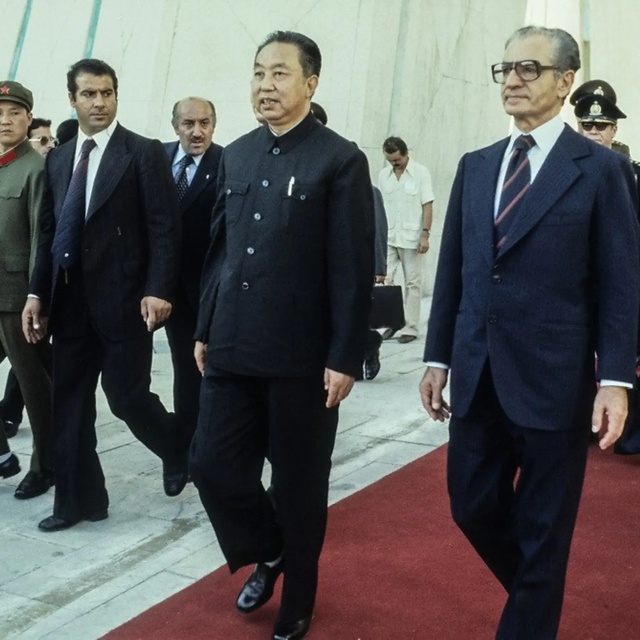
During his leadership, Hua Guofeng sought to maintain political stability while promoting economic reconstruction and modernization. He supported industrial development, agricultural improvement, technological advancement, and national economic planning. Hua also promoted the ambitious “Ten-Year Plan” and the modernization of China’s industrial sectors. However, his policies retained many features of Mao-era economic planning and emphasized large-scale investment and state-led development.
His approach reflected an effort to modernize China while preserving the political legacy of Mao Zedong. Despite his early prominence, Hua Guofeng gradually lost political influence as Deng Xiaoping gained increasing support within the Communist Party. Deng advocated more pragmatic economic policies, greater flexibility, and reforms that differed from Hua’s emphasis on continuing Mao’s established policies.In 1980, Hua resigned as Premier, and in 1981, he stepped down as Chairman of the Communist Party and the Central Military Commission.